Lithium Forklifts Change the Emissions Ledger and the Training Plan
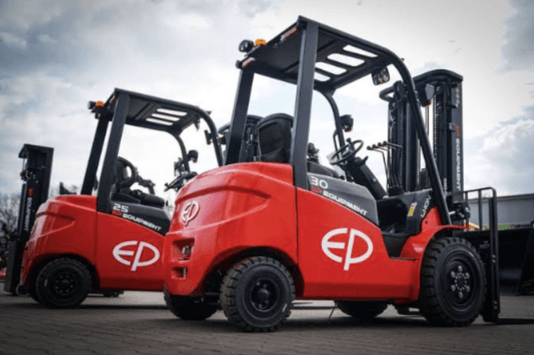
At DHL’s Horsley Park facility in Australia, lithium-ion forklift batteries helped support extended operations through fast charging and reduced downtime. A Material Handling & Logistics report described how short charging sessions during breaks helped keep equipment operating across two shifts.
For warehouse managers considering a similar transition, the appeal extends beyond battery performance. Replacing propane-powered forklifts with electric models can change a facility’s emissions inventory, equipment maintenance needs, and operator training requirements.
The benefits can be substantial, but they depend on how the fleet is operated and how carefully the transition is managed.
Propane Forklifts Contribute to Scope 1 Emissions
A propane forklift produces emissions when it burns fuel during operation. Under the GHG Protocol Corporate Standard, emissions from fuel combustion in company-owned or controlled equipment generally fall under Scope 1. That makes propane-powered forklifts part of the facility’s direct emissions inventory, alongside other fuel-burning equipment.
Replacing those trucks with electric models eliminates their on-site combustion emissions. For companies working to reduce Scope 1 emissions, electrifying material-handling equipment may be one practical option. The size of the reduction depends on the existing fleet, fuel consumption, operating hours, and other equipment contributing to the company’s emissions.
Electricity Creates a Different Accounting Question
Electric forklifts produce no combustion exhaust during operation, but the electricity used to charge them still has an environmental footprint. Emissions associated with purchased electricity generally fall under Scope 2. The resulting carbon impact depends partly on how that electricity is generated and how much energy the new fleet consumes.
A facility using electricity from lower-emission sources may achieve a larger overall reduction than one relying on a more carbon-intensive grid. The transition isn’t simply a matter of moving an identical quantity of emissions from Scope 1 to Scope 2. Different powertrains have different efficiencies, and the overall results depend on energy use and electricity generation.
Electric equipment can also improve indoor working conditions by eliminating combustion exhaust at the point of use. That can be particularly valuable in enclosed warehouses and food-handling facilities.
However, employers still need to manage other indoor air quality and workplace hazards.
See also: How To Design Better Business Presentations
Operators Need Training for the New Equipment
Switching forklift power sources can introduce operating differences that employees need to understand. Operators accustomed to propane trucks may encounter different acceleration, braking characteristics, controls, warning systems, and charging procedures when moving to electric equipment.
A comprehensive forklift certification training program provides an important foundation in safe equipment operation. Employers can build on that knowledge with instruction specific to their new trucks and workplace conditions.
Under OSHA’s powered industrial truck standard, training must address applicable truck-related topics, workplace hazards, and operator performance.
Employers don’t necessarily need to repeat instruction covering skills an operator has already mastered. However, assignment to a different type of truck can trigger refresher training, and operators must be evaluated to establish their ability to operate the equipment safely.
For a lithium-powered fleet, training may include charging connections, battery indicators, equipment-specific emergency procedures, and recognizing conditions that require maintenance attention.
The goal is to build on existing operator knowledge while preparing employees for the equipment they’ll actually use.
Charging Infrastructure Needs Its Own Safety Plan
Lithium-ion charging systems require more planning than simply installing an electrical outlet.
Facilities must consider charger compatibility, electrical capacity, equipment placement, manufacturer instructions, and applicable fire and electrical requirements.
Charging arrangements can differ substantially between lithium-ion and traditional lead-acid battery systems. For example, lithium-ion batteries generally don’t require the same routine electrolyte handling associated with flooded lead-acid batteries.
That doesn’t eliminate safety considerations. Damaged batteries, incompatible charging equipment, and thermal events can present serious hazards.
Employers should establish appropriate charging procedures, inspection practices, emergency response plans, and maintenance responsibilities based on the specific equipment and facility.
Not every lithium-ion charging installation requires an identical dedicated room, ventilation arrangement, or fire protection system. Requirements depend on the installation and applicable codes.
Keep Emissions and Training Records Aligned
Once the new fleet enters service, employers should update both their environmental records and their equipment documentation. Emissions accounting may require updated fuel consumption figures, electricity usage data, and information about when equipment was replaced.
Training records should accurately document operator instruction and evaluations, including the information OSHA requires. Employers can also maintain supporting records identifying which equipment operators are qualified to use and any additional instruction completed during the transition.
Those records serve different purposes, but both help demonstrate that the organization has managed the equipment change systematically.
Lithium-powered forklifts can offer operational and environmental advantages. Realizing those benefits requires more than purchasing new trucks. It means preparing the facility, updating procedures, and ensuring operators have the knowledge and practical skills to use the equipment safely.