How to Choose Onsite OSHA Forklift Training for Southern California Workplaces
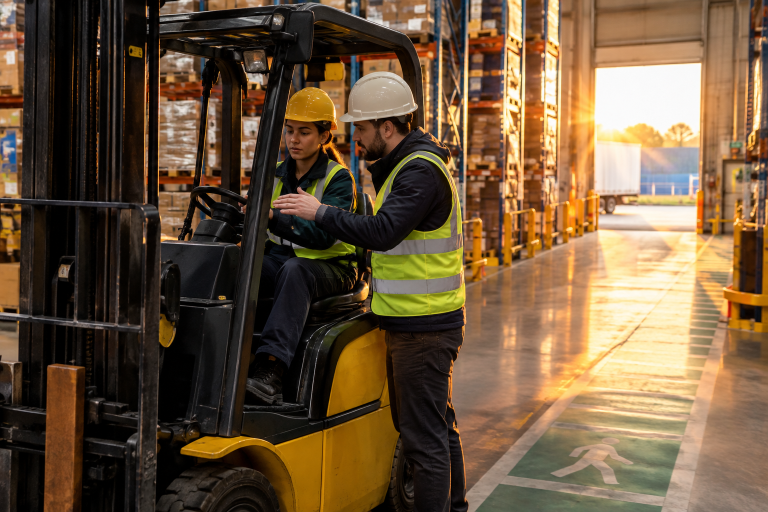
How Can USA Forklift Certification Help With an Onsite OSHA Forklift Training Request?
Employers looking for onsite OSHA forklift training and certification need a program that goes beyond a short written test. A useful training plan should combine instruction, practical operating exercises, an evaluation of each operator, and records that support the employer’s compliance responsibilities.
USA Forklift Certification presents itself as a Southern California provider of forklift training, certification, and renewal services for workers, warehouses, and businesses. Its training page lists programs for several equipment types, flexible scheduling options, company contracts, and service areas that include Pomona, San Bernardino, Commerce, Riverside, Rancho Cucamonga, and Anaheim.
Employers remain responsible for ensuring that operators are trained and evaluated for their work environment. The OSHA forklift training requirements explain that a program must be based on safe truck operation, the types of vehicles used, workplace hazards, and the operator’s demonstrated ability to perform the job safely.
See also: Technological Changes Altering Business in 2025
Why Does Forklift Training Need To Match the Workplace?
A generic course may introduce important safety concepts, but it cannot automatically account for the conditions at every facility. A warehouse with narrow aisles, high storage racks, loading docks, pedestrian traffic, ramps, uneven surfaces, or frequent trailer loading has operating risks that deserve direct attention during training and evaluation.
OSHA requires formal instruction, practical training, and workplace performance evaluation. Formal instruction can include classroom discussion, video, written materials, or computer-based learning. Practical training includes demonstrations and exercises. The final evaluation helps determine whether an operator can use the specific powered industrial truck safely under the conditions found at the job site.
Refresher training may be necessary when an operator is observed operating unsafely, is involved in an accident or near miss, receives an evaluation showing unsafe performance, is assigned a different type of truck, or faces changed workplace conditions. OSHA also requires an evaluation of each operator’s performance at least once every three years.
What Does USA Forklift Certification Provide?
USA Forklift Certification states that it provides first-time OSHA forklift training, license and certification support, and renewals. The company also describes programs intended for individual workers as well as company contracts for businesses and warehouses. Its site says it has been in business for more than 35 years and promotes training designed to fit limited schedules.
- Initial operator training: Options for people preparing for forklift training and certification testing.
- Renewal support: Training and renewal options for operators who need updated instruction or evaluation support.
- Company programs: Contract options that businesses can discuss for multiple employees or recurring training needs.
- Schedule flexibility: Programs promoted for workers balancing jobs, family obligations, and changing availability.
- Career-oriented support: The company states that it also helps with job placement connected to forklift skills and employment prospects.
Which Forklift Types Can the Training Cover?
One practical consideration is whether the training scope matches every truck and attachment operator’s use. USA Forklift Certification lists training options for cherry picker forklifts, stand-up forklifts, sit-down forklifts, pallet jacks, reach forklifts, and clamp forklifts.
Employers should provide a complete equipment list when requesting a program. Moving from one truck type to another can introduce different controls, visibility limitations, capacity considerations, steering characteristics, or attachment requirements. The employer and training provider should confirm which equipment will be included and whether the evaluation can reflect the operator’s actual duties.
Why Is Hands-On Evaluation Important?
A written assessment can help show whether an operator understands rules and procedures, but it does not, by itself, demonstrate safe equipment control. Practical evaluation can address pre-operation inspections, steering, travel speed, load handling, visibility, stability, pedestrian awareness, ramps, dock areas, and tight operating spaces.
For example, a sit-down forklift operating in broad warehouse aisles may create different challenges than a reach forklift used around tall rack systems. Hands-on evaluation helps identify whether the operator can apply safe practices with the truck, load, and worksite conditions involved.
What Safety Problems Should Forklift Training Address?
Forklift safety instruction should address foreseeable risks rather than treating certification as a one-time event. Forklift safety guidance from NIOSH emphasizes the importance of safe work practices, worker awareness, equipment safeguards, and adherence to OSHA requirements.
- Separating pedestrian and vehicle travel paths where possible.
- Maintaining safe travel speed and clear sight lines.
- Understanding load balance, rated capacity, stability, and attachment limitations.
- Using caution around ramps, dock edges, trailers, and uneven surfaces.
- Operating safely in narrow aisles and congested work areas.
- Completing required inspection, maintenance-reporting, charging, or refueling procedures.
- Avoiding unsafe behavior around elevated loads and suspended or unstable materials.
How Should Southern California Employers Request Training?
- Count the operators who need initial training, refresher instruction, or evaluation.
- List all forklift types, pallet jacks, attachments, and specialized equipment used onsite.
- Describe the workplace, including aisles, racks, docks, ramps, pedestrian routes, and unusual hazards.
- Ask whether training can be coordinated around operational hours and whether onsite delivery is available for the location.
- Confirm how the practical evaluation will be handled and which certification records will be provided.
- Discuss whether a company contract is appropriate for a larger team or recurring workforce needs.
What Should Employers Confirm Before Choosing a Provider?
Before scheduling, employers should ask clear questions that connect the training plan to their safety program:
- Will the course cover every truck type and attachment used by the operators?
- Will trainees demonstrate operating skills in conditions that reflect the workplace?
- Will documentation include the operator’s name, training date, evaluation date, and the name of the trainer or evaluator?
- Can the provider support refresher training after an incident, a changed equipment assignment, or changed site conditions?
- Are scheduling, language needs, location, and onsite details confirmed in advance?
Conclusion
Employers seeking forklift training should focus on a program that fits their equipment, employees, and operating environment. USA Forklift Certification offers a local Southern California option for training, renewals, multiple equipment categories, flexible scheduling, and company contracts. A detailed request that identifies the operator count, equipment list, workplace hazards, desired schedule, and documentation needs gives the provider and employer a stronger starting point for a practical training plan.