How Engine Efficiency Is Revolutionizing Heavy-Duty Trucking
Introduction
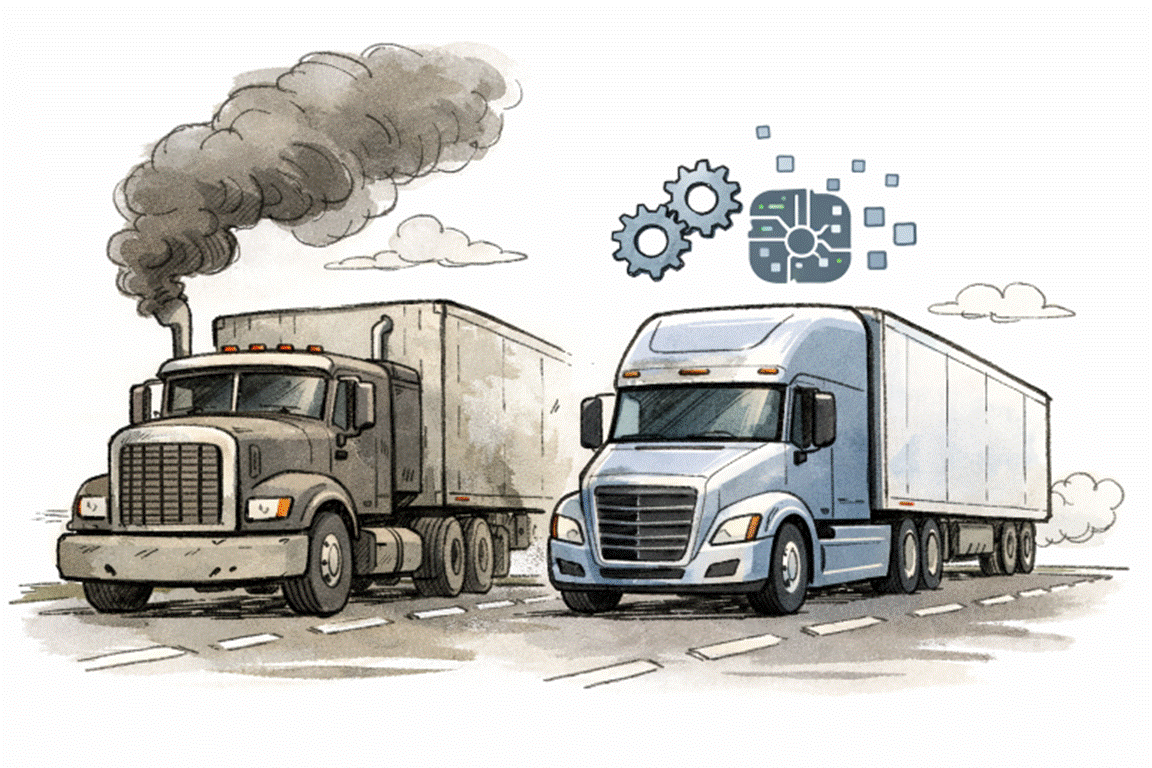
The heavy-duty trucking sector has long been the backbone of supply chains and commerce, transporting goods across countries and continents. Historically, this industry faced criticism for its high fuel consumption and significant contribution to air pollution. However, current advancements are completely transforming expectations for performance and environmental responsibility in truck engines. Fleet operators and truck enthusiasts are increasingly turning to next-generation technologies to balance reliability and sustainability with cost savings. These innovations build on the legacy of renowned engines like the Cummins N14 engine, which set enduring standards for durability and efficiency. As the regulatory landscape grows stricter and diesel prices fluctuate, these engine improvements help companies remain competitive while supporting global efforts to lower emissions. The integration of advanced technologies has made diesel and alternative-fueled engines more efficient, enabling trucks to travel further on every gallon. Today’s developments prove that progress is attainable without sacrificing the power or dependability that trucking professionals require.
Engine manufacturers are taking bold steps to redesign core engine components, integrate digital controls, and improve combustion efficiency. This commitment makes innovation in trucking sustainability a reality both for major carriers and independent operators. The shift toward smarter, cleaner engines is essential for meeting environmental targets and securing the future of freight logistics. With pressure mounting from both government standards and commercial customers, only truly innovative advancements in engine design and fuel systems can meet the demands of modern logistics. Recent improvements, from sophisticated exhaust treatments to hybrid powertrain integration, highlight the industry’s determined drive to exceed expectations for both performance and environmental care.
Advancements in Engine Technology
Engine technology has evolved rapidly over the past decade. Companies like Cummins have invested heavily in research and development to produce engines that maximize output while minimizing resource consumption. The next-generation X15 diesel engine, for example, is packed with enhancements designed to boost fuel efficiency and reduce emissions. Digital technologies such as real-time monitoring, precision fuel injection, and advanced cooling systems enable intuitive responses to changing driving conditions. These features are rapidly becoming the new industry standard, promising ongoing improvements for operators. Other manufacturers have also prioritized innovation. Detroit has developed its Gen 6 engines, which combine improved hardware with smarter software to deliver both compliance and efficiency. The continuous adaptation of turbochargers, exhaust gas recirculation (EGR) systems, and electronic management platforms is proving crucial not just for performance but also for maintaining fleets’ environmental credentials.
Impact on Fuel Efficiency
Improvements in engine construction and management translate directly into savings at the pump. According to Cummins, advanced cylinder deactivation systems have achieved 2.76% fuel-economy gains in real-world applications of heavy trucks. These gains quickly add up: a long-haul Class 8 truck traveling more than 100,000 miles per year can save thousands of dollars while reducing its overall carbon footprint. Even incremental increases in fuel efficiency have a measurable impact on fleet-wide budgets and emissions profiles. The pursuit of fuel efficiency has led to the creation of integrated powertrains and coordinated transmission controls. These updates help engines operate at the most efficient gear and RPM settings for longer periods, maximizing the fuel-to-energy conversion for each journey.
Meeting Emission Standards
The United States Environmental Protection Agency (EPA) continues to introduce ever-stricter standards for nitrogen oxides (NOx) and particulate matter. This push for lower emissions compels manufacturers to design solutions that go beyond compliance. Daimler Truck North America’s Detroit Gen 6 engine line is purpose-built to align with the EPA’s 2027 NOx regulations while simultaneously improving fuel economy by an estimated 3% for linehaul applications. This strategy involves closer integration of selective catalytic reduction (SCR) systems, diesel particulate filters, and advanced sensors for precise emissions management. By leveraging analytics and smart diagnostics, fleets can maintain regulatory compliance with less downtime and fewer manual interventions.
Economic Benefits for Fleet Operators
With fuel costs accounting for a significant portion of fleet expenses, every percentage point of efficiency translates directly into operational savings. For a Class 8 truck that covers 120,000 miles annually, even a modest 2–3% improvement in fuel economy results in $4,000 to $6,000 in annual savings per vehicle. In a fleet of 500 trucks, this equates to millions of dollars retained for investment or reinvestment. Additionally, reduced emissions result in fewer penalties and lower maintenance costs, as engines run cleaner and remain compliant more easily. These economic benefits help justify initial investments in new engine technology, allowing operators to upgrade their fleets while confidently supporting sustainability.
Case Studies of Innovative Engines
Several industry leaders provide examples of how next-generation engines are making real-world impacts. International’s S13 Integrated powertrain, a collaboration with European partners like MAN and Scania, is a standout. Designed to reduce both fuel use and emissions, the S13 demonstrates what is possible when best practices and advanced research converge. This transition underscores the trend away from legacy engines toward fully optimized, digitally managed powertrains. Other success stories include Navistar’s SuperTruck II prototype, which uses a hybrid platform combining diesel and electric propulsion. These projects illuminate what the near future may hold for domestic and international trucking: lower emissions, greater reliability, and measurable reductions in total cost of ownership.
See also: Customised Workwear – Empowering Businesses Professional Branding
Future Trends in Heavy-Duty Engine Development
The path ahead in heavy-duty engine development is marked by integration of renewable fuels, electrification, and digital fleet management. Hybrids, natural gas engines, and fuel cells are quickly becoming part of the conversation for forward-thinking fleets. Government and private sector partnerships are accelerating research, as demonstrated by programs such as SuperTruck II. Over the coming years, a cross-section of technologies will work in tandem, operating on biodiesel, renewable diesel, or hydrogen as regulatory demands continue to evolve. The industry’s ability to adapt will prove crucial to the longevity of heavy-duty transport in a rapidly changing world.
Conclusion
Engine efficiency is reshaping the trajectory of the heavy-duty trucking industry. New technologies are enabling operators to achieve unprecedented reliability, fuel savings, and regulatory compliance, without compromising on the robust capabilities that define long-haul trucking. As both environmental stewardship and economic performance become top priorities, embracing these advancements ensures a resilient and sustainable future for fleets around the globe.