One Damaged Slope Does Not Mean A Whole New Roof
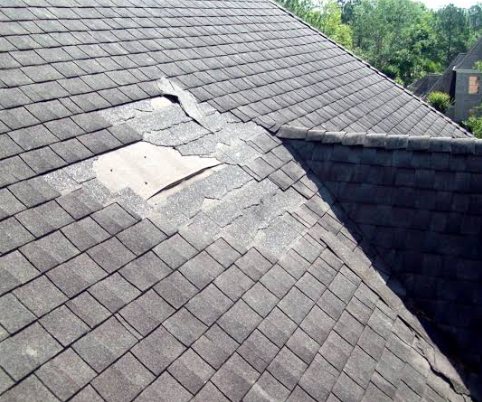
Creased shingles on one slope of a roof are usually a repair bill, not a replacement bill. That is the direct answer for a Dayton household looking at a $1,500 home repair fund and a south-facing slope that took the worst of the wind. The roofers Dayton TX homeowners call after a rough night should be able to say which of those two things they are looking at before anyone writes a number down. Repairing the one slope that failed costs a fraction of a tear-off and buys real years, as long as the untouched slopes get inspected and everything found gets written down. I track every house expense in a spreadsheet, and the column that matters here is not the quote total. It is whether the money buys years or only buys quiet.
Damage On One Slope Reads Differently
Wind does not load a roof evenly. It finds an edge, peels a course of shingles up, then sets them back down with a crease running across the tab where the adhesive seal let go. That crease is the tell, because a creased shingle sheds water right up until it does not, and nobody gets a warning the day it stops. On a hip roof with four planes, the south face can be chewed up while the north face is untouched, and that asymmetry is the whole argument for treating one slope instead of paying for a tear-off.
Trade guidance has said as much for years. A February 2026 resource review from the National Roofing Contractors Association holds that isolated slope damage can be repaired without full roof replacement when the structure around it checks out sound. That last condition is where the real work sits. What usually turns up on an inspection like this is a second, smaller problem somewhere else on the roof, most often flashing at a chimney or a vent boot gone brittle in the Texas sun.
See also: Customised Workwear – Empowering Businesses Professional Branding
The Next Ninety Days After A Repair
A good repair is quiet, which makes it hard to feel like you bought anything at all. The first week is the loud one: new shingles sit slightly proud of the old field until the sun heats them and the adhesive strips grab, and a stripe of fresh color across one slope looks obvious from the street. By month three that stripe has weathered down and the seal is fully set, so the honest test of the work is the next long soaking rain rather than the day the crew packs up. Within 90 days you should have sat through at least two heavy storms in this part of Texas, and a dry ceiling through both of them is your answer. Year two is when I go back to my own notes, because that is roughly when a repair that was really just a patch starts shedding granules around the edges of the fix.
The roofers Dayton TX residents call back a second time are the ones who leave paperwork behind. Ask for photos of the slope before and after, a note naming the shingle line that was installed, and the date of the storm the damage is tied to. NOAA’s Storm Events Database is free to search and will confirm that date for your own file. The habit spilled over into my fence records, since the same gust bent two posts on the back line and I had written nothing down about when. Back to the roof, though, because that is the expensive half of the property.
Spend Where The Documentation Follows
Say a single-slope shingle repair on that Dayton house runs somewhere near $850, and a full replacement quote lands around $18,000. Those figures are illustrative rather than promises, but the ratio is the point, because the repair is a small fraction of the replacement and it leaves most of the sinking fund intact. Pay for the repair and pay for the write-up, and a year from now you are deciding with records instead of guessing at what is under the shingles. Refuse the write-up and the same $850 buys a slope that looks fine and a roof you still cannot describe. A roof will tell you what it needs, in its own slow way, if somebody bothers to take notes.