A Guide to Effective Workplace Cleaning in Florida
Key Takeaways
- Cleaning schedules should be based on traffic, room use, and risk rather than a single building-wide routine.
- Restrooms, breakrooms, entrances, shared devices, and high-touch surfaces usually need the most consistent attention.
- Safe chemical handling, ventilation, training, and documented procedures are essential parts of the plan.
- Microfiber tools, correct dilution, supply tracking, and careful water use can support both efficiency and sustainability.
- Regular inspections and occupant feedback help identify problems before they become routine complaints.
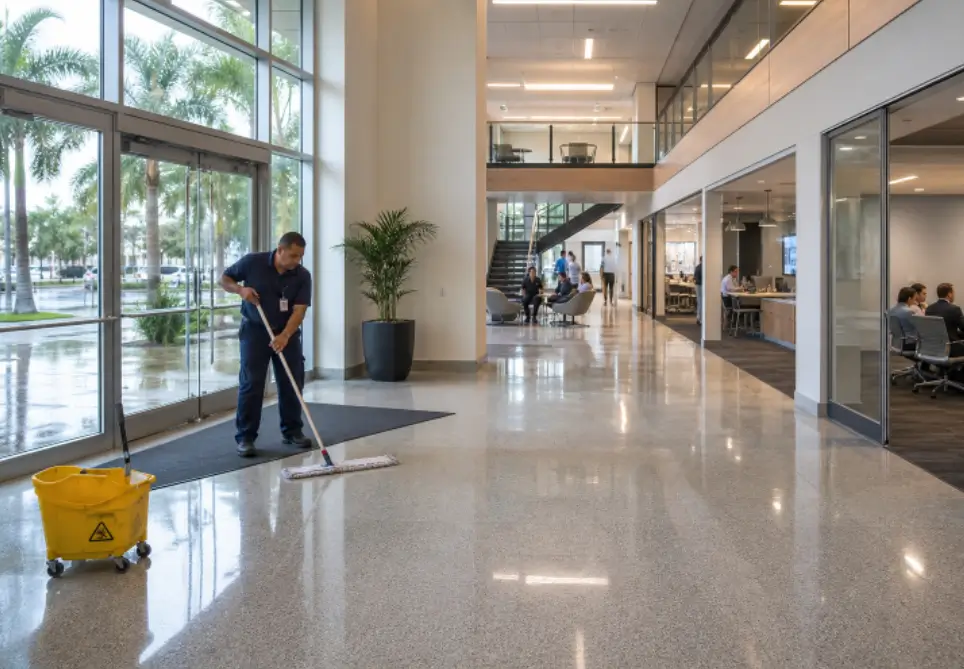
Florida workplaces need cleaning plans that go beyond a polished appearance. Humidity, rain-soaked entryways, tracked-in sand, busy visitor periods, and shared indoor spaces can all change what needs attention and when. Whether a facility has an in-house team or works with janitors in Florida, the plan should reflect how people actually use the building. A practical program protects employees, visitors, the flooring, the furnishings, and the daily operations. It gives workers clear instructions, helps managers spot recurring issues, and makes it easier to adjust routines when occupancy, weather, or workplace schedules change.
Why Cleaning Plans Need a New Approach
A storage room used once a week should not receive the same schedule as a crowded breakroom or lobby. High occupancy, food service, moisture, shared touchpoints, and operating hours all affect cleaning needs. In Florida, entryways may need additional attention after rain, while air-conditioned interiors still require reliable care for restrooms, kitchens, and shared workspaces. Visible cleanliness matters, but it is only one result of a strong plan. A well-managed routine also supports safety, occupant comfort, indoor order, and longer-lasting floors and surfaces.
Start With a Workplace Assessment
Before assigning tasks, walk through the property at different times of day. Note the number of employees and visitors, peak traffic periods, shared equipment, food or waste areas, moisture concerns, floor types, delicate materials, and repeated complaints about odors, spills, or supplies.
Quick Walk-Through Checklist
- Which rooms receive the heaviest foot traffic?
- Where do people eat, wait, meet, or share devices?
- Which entrances become slippery or dirty during wet weather?
- Are cleaning supplies, signs, and protective equipment easy to access?
- Which recurring issues need a schedule change rather than another one-time fix?
Divide the Building Into Cleaning Zones
Grouping areas by use makes schedules easier to manage. Create a simple map or digital list for high-contact points such as handles, rails, buttons, counters, and shared keyboards. Set separate zones for wet areas, including restrooms and kitchens; shared work areas, such as meeting rooms and breakrooms; public-facing spaces, including lobbies and waiting rooms; low-traffic rooms; and any specialized areas with their own rules.
See also: 7 Strategies for Predictable Online Business Growth
Set Task Frequencies by Risk and Use
Frequency should follow building conditions, not habit. Use a written task matrix that lists the location, task, frequency, assigned person, needed supplies, safety notes, and completion check.
Daily Tasks
- Remove waste, replace liners, clean restrooms, and replenish soap and paper supplies.
- Address spills, visible debris, food-preparation areas, and frequently touched shared surfaces.
Weekly and Periodic Tasks
- Detail-clean floors, interior glass, partitions, ledges, vents, shared furniture, and storage surfaces.
- Schedule high dusting, carpet or upholstery care, floor treatment, and cleaning behind movable equipment monthly or seasonally as needed.
Protect Workers and Building Users
Every cleaning plan should explain how products are used, stored, labeled, and diluted. Workers need access to safety data sheets and the protective equipment identified for their tasks. They should never mix chemicals unless product directions specifically allow it, and wet-floor signs should be placed before work begins. In community settings, regularly cleaning high-touch surfaces is a sensible baseline. At the same time, disinfection may be appropriate when someone has been visibly ill or when facility-specific requirements call for it. Product labels, required contact times, adequate ventilation, and training remain important safeguards.
Choose Products and Tools With Care
The strongest chemical is not automatically the right choice. Match products to the surface, soil, room use, and worker-safety needs. Follow manufacturer directions, use color-coded cloths or tools where cross-use could be a concern, and replace worn mops, pads, or cloths that no longer remove soil effectively. Track supply use so shortages and overuse are visible early.
Add Sustainability Without Losing Performance
Sustainability works best when it supports daily performance. Concentrates and dispensing systems can help standardize dilution and reduce packaging, while washable microfiber tools may reduce the use of disposable materials. Review low-traffic areas so staff time, water, and supplies are directed where they matter most. Current priorities in the cleaning industry also highlight the growing role of dispensing, measurable performance, smart tools, and resource-conscious operations.
Create a Simple Quality-Check System
Quality control does not need to be complicated. Use room-by-room checklists, review supply levels, log missed tasks, and track complaints by location and type. Inspect busy areas during operating hours and ask occupants short, specific questions. Look for patterns: repeated restroom complaints may point to gaps in timing, staffing, equipment, or training rather than a single missed task.
Adjust the Plan for Hybrid Work
Hybrid schedules can concentrate use on certain days. Review occupancy patterns, events, training calendars, and visitor activity. Shared desks and meeting rooms may need more attention on busy days, while rarely used rooms may need a lighter routine. Entrances, kitchens, restrooms, and common equipment should remain on dependable schedules even when attendance fluctuates.
Common Questions About Workplace Cleaning Plans
How often should a workplace be cleaned?
The right frequency depends on occupancy, room type, surface use, waste volume, and any industry-specific requirements. High-use spaces generally need more frequent service than private or low-traffic areas.
Which areas need the most attention?
Restrooms, kitchens, entrances, elevators, waiting areas, meeting rooms, and shared devices are common priorities because they combine frequent use with shared contact.
How can cleaning costs be controlled?
Accurate schedules, preventive floor care, proper product dilution, supply tracking, and early response to minor issues can reduce avoidable waste and disruption.
Conclusion
An effective Florida workplace cleaning plan is practical, flexible, and easy to review as building needs change. It should be based on real building use, including traffic levels, shared spaces, high-touch surfaces, restrooms, entrances, equipment, and areas affected by heat, humidity, moisture, or outdoor debris. Protecting workers also requires appropriate cleaning methods, safe product handling, proper equipment, and clear procedures for responding to spills or other immediate concerns. Each cleaning zone should have clear expectations, assigned responsibilities, and reasonable service frequencies so employees know what needs to be completed and when. Regular inspections and feedback can help identify missed tasks, supply shortages, recurring concerns, or areas that need additional attention. As occupancy, staffing, seasons, and workplace activities change, the plan should be updated accordingly. The best plan is not the longest document or the most complicated system. It is the one people can understand, follow consistently, and improve through daily review.