How Data-Driven Personalization Is Shaping the Future of Marketing
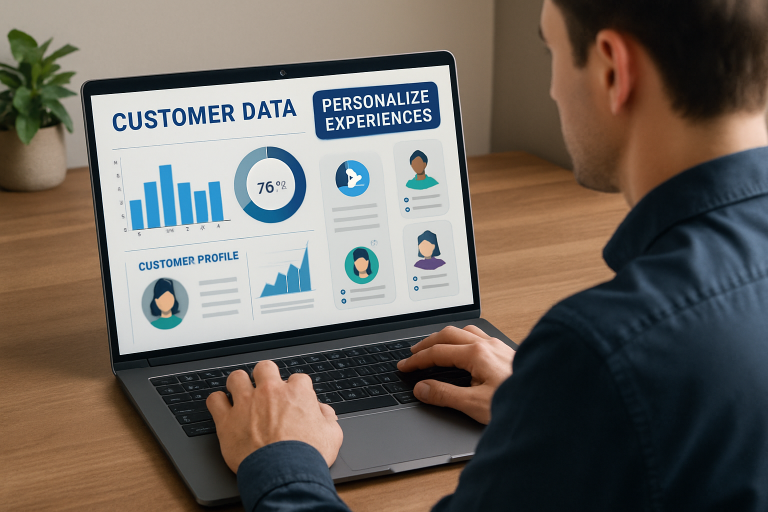
Table of Contents
- The Rise of Personalized Marketing
- Leveraging Artificial Intelligence and Machine Learning
- Importance of First-Party Data
- Balancing Privacy and Personalization
- Emerging Technologies in Personalization
- Challenges and Considerations
- Conclusion
Data-driven personalization is transforming how brands connect with their audiences, shifting marketing from broad messaging to highly tailored experiences. By analyzing consumer behavior, preferences, and engagement patterns, organizations can create more relevant content that resonates with individuals on a deeper level. This approach not only improves customer satisfaction but also enhances efficiency by ensuring that marketing efforts are directed toward the right audience at the right time. As digital interactions continue to expand, personalization has become a key factor in building meaningful and lasting customer relationships.
At the core of this evolution is the growing use of advanced tools and technologies that enable marketers to process large volumes of data in real time. An ad tech platform, for instance, helps streamline the delivery of targeted campaigns while maintaining consistency across multiple channels. As these systems become more sophisticated, they are shaping a future where marketing strategies are increasingly adaptive, responsive, and grounded in data-driven insights rather than assumptions.
The Rise of Personalized Marketing
Personalized marketing is no longer a trendy innovation. It has quickly become a best practice, driven by consumers’ preferences for brands that speak directly to their needs. By integrating data at every stage of the customer journey, marketers can build detailed profiles that anchor each touchpoint in relevance and meaning. Modern audiences not only expect but demand these tailored experiences and are increasingly choosy with where they give their loyalty.
Brands failing to deliver personalized experiences miss out on significant value. According to McKinsey research, companies that personalize their marketing efforts can improve customer outcomes and boost revenue growth by up to 15 percent. This shift is defining a new era in the marketing landscape, where relevance and context are crucial drivers of brand loyalty.
Leveraging Artificial Intelligence and Machine Learning
Artificial Intelligence (AI) and Machine Learning (ML) are at the heart of the personalization revolution. These technologies empower marketers to make sense of mountains of data, uncover patterns, and accurately predict future behaviors. AI-powered personalization engines can craft unique content, suggest relevant products, or choose optimal delivery channels, all with minimal manual oversight.
For example, AI-driven recommendation systems, widely used by streaming platforms and ecommerce retailers, dynamically adapt to individual preferences based on real-time interactions. This allows brands not only to save valuable time but also to maximize return on investment by delivering the right message to the right person at the right moment. The impact is apparent in higher engagement rates, reduced churn, and improved customer satisfaction.
Importance of First-Party Data
In the age of tightening regulations and growing consumer scrutiny, first-party data is emerging as the foundation of responsible personalization. First-party data refers to information collected directly from customers who interact with your website, app, or other owned channels. Unlike third-party data, which is often aggregated and less reliable, first-party data provides accurate and up-to-date insights straight from your engaged audience.
Prioritizing first-party data collection helps brands foster customer trust, deliver relevant experiences, and comply with greenfield privacy laws such as GDPR and CCPA.
Balancing Privacy and Personalization
As personalization becomes more sophisticated, maintaining ethical standards around consumer privacy is more important than ever. Research shows that while consumers are often willing to share information in exchange for value, they want transparency in how their data is used. Offering simple tools for users to manage their preferences, as well as being clear about data collection practices, are minimum requirements for earning ongoing trust.
Companies that invest in ethical data practices limit reputational risk and can build stronger relationships with stakeholders over the long run.
Emerging Technologies in Personalization
One of the most noteworthy advances in marketing technology is the rise of composable customer data platforms (CDPs). These flexible systems bring disparate customer information together into a single, unified view, enabling teams to coordinate personalization strategies across every channel with incredible precision. Because composable CDPs are modular, businesses can scale and adapt quickly, even as their data needs change.
The promise of such emerging technologies lies in delivering seamless, hyper-personalized journeys that follow a customer from first interaction to ongoing engagement, making marketing efforts more efficient and effective.
Challenges and Considerations
Despite the clear benefits, implementing effective data-driven personalization comes with hurdles. Businesses must ensure data accuracy, navigate integration across legacy and modern systems, and continuously monitor the evolving landscape of privacy regulations. Failure to address these challenges can put both customer trust and regulatory standing at risk. For those who succeed, the rewards include stronger brand equity, higher customer retention, and a sustainable competitive advantage.
Conclusion
Data-driven personalization is not just a marketing strategy; it is a fundamental shift in how brands interact with their audiences. By embracing AI, focusing on high-quality first-party data, and upholding consumer privacy, businesses can craft engaging, meaningful experiences that drive loyalty and growth. The future belongs to organizations that can adapt swiftly, innovate responsibly, and always keep the customer at the center of their efforts.