The Hidden Operating Cost of Cosmetic and Medical Lasers: What Clinics Miss When Budgeting for Devices
The sticker price on a cosmetic or medical laser is the number that gets pitched to the practice owner. It’s also the number that’s least likely to hurt them. The real cost of running these devices shows up quietly, month after month, and it can turn a profitable treatment room into a break-even one before anyone notices.
Most clinics budget the device, but very few budget the program around it.
Unfortunately, that’s where the money leaks.
The Purchase Price Is a Down Payment on the Real Bill
A capital purchase in medicine tends to look like a one-time event, but Industry budgeting guides for 2026 point out that lifecycle costs for medical equipment routinely dwarf the acquisition price once service contracts, consumables, software, training, parts, and end-of-life disposal are added in.
For lasers specifically, that math is unforgiving. The device is a platform. Everything that keeps it running, legal, and safe is priced separately.
See also: Lifeguard Gear Essentials: What You Need for the New Lifeguarding Season
Maintenance and Downtime Eat Margin
Lasers are precision instruments with consumable optics, cooling systems, and calibration cycles that don’t care how booked your schedule is. When something drifts out of spec, treatments stop. When treatments stop, the room still costs what it costs to keep the lights on.
Safety Compliance Is a Standing Line Item
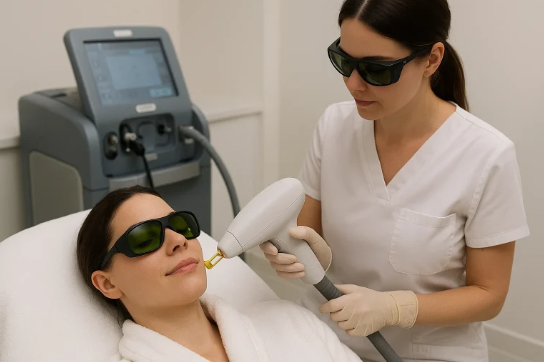
The compliance side is where clinics underestimate the most. Under ANSI Z136.3, every facility using a medical or aesthetic laser is expected to run a documented Laser Safety Program under a designated Laser Safety Officer. That’s not a title you hand out at a staff meeting.
It requires trained personnel, written procedures, hazard evaluations, PPE, signage, incident logs, and refreshers. Practices that treat this as paperwork tend to discover the real cost during an inspection, an insurance renewal, or a patient complaint. Building the program in from day one, with proper operator and LSO training, is dramatically cheaper than reconstructing it under pressure.
The Liability Cost Nobody Puts on the Spreadsheet
Poorly supervised laser work has a track record, and insurers know it. A review of cutaneous laser surgery liability claims from 2012 to 2020 found that 71% involved a nonphysician operator. That statistic quietly drives malpractice premiums, delegation rules, and settlement exposure.
One serious claim can outweigh a decade of consumables and service contracts. Yet the same clinics that will haggle a vendor over the price of a handpiece often don’t budget a dollar for the training and documentation that keeps them out of that claim in the first place.
What to Actually Budget For
A defensible laser budget accounts for the device, the recurring service and consumables, a realistic downtime reserve, safety program overhead including LSO time and staff certification, PPE and signage, and a compliance buffer for evolving standards.
Price all of it before signing the purchase order, not after the first breakdown. The clinics that stay profitable with lasers are the ones that treat the device as the cheap part.