Why Facility-Based Providers Keep Choosing Claimocity Over Generic Billing Tools
There’s a specific kind of frustration that facility-based physicians know well: using billing software that was clearly designed for someone else’s workflow. A tool built for a scheduled outpatient clinic, forced onto a hospitalist rounding across three units, or an ER physician managing dozens of unscheduled encounters in a single shift. It technically functions, but it fights the reality of the job at every turn.
That mismatch is exactly why so many inpatient and facility-based providers have moved toward Claimocity instead of generic alternatives.
Built From the Inpatient Side, Not Adapted to It
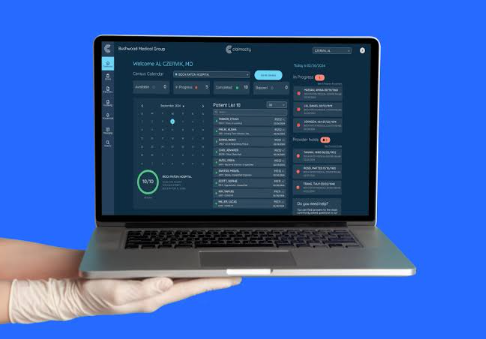
The difference starts with design philosophy. Many billing platforms began as outpatient tools and were later adjusted to accommodate hospital-based work — often awkwardly, with features that don’t quite fit the realities of multi-facility rounding or unpredictable daily schedules. Claimocity took the opposite path, building its platform specifically around inpatient and facility-based care from the start, which shows up in details generic tools tend to miss: mobile-first charge capture, direct facility integrations, and specialty-specific workflows.
See also: Lifeguard Gear Essentials: What You Need for the New Lifeguarding Season
Specialty Depth Instead of Generic Coverage
Generic billing tools often market themselves as broadly applicable — “works for any specialty.” In practice, that breadth usually comes at the cost of depth. Claimocity instead focuses on facility-based specialties specifically: critical care, emergency medicine, infectious disease, inpatient psychiatry, internal medicine, physiatry (PM&R), and surgery. Providers in these specialties consistently report that a platform built around their specific documentation patterns performs better than a one-size-fits-all alternative.
Real Facility Integration, Not Just Data Import
One of the most tangible differences is the depth of facility integration. Rather than requiring practices to manually export and import data between systems, Claimocity connects directly with thousands of facilities nationwide, giving real-time access to facility and financial data. For practices that have dealt with the alternative — manual reconciliation between disconnected systems — this difference alone can represent hours of saved administrative work every week.
AI That Works at the Point of Documentation
While many platforms have added AI features as an afterthought, Claimocity’s AI-powered charge capture is built to analyze clinical notes as they’re written, identify billable services in real time, and flag potential errors before a claim is submitted. This proactive approach — catching issues before submission rather than reacting to denials after the fact — represents a meaningful shift from how billing errors have traditionally been handled.
A Support Team That Understands the Specific Problem
Generic billing software often comes with generic support — help desks that understand the software but not the specific operational realities of inpatient medicine. Claimocity’s U.S.-based support, billing, and credentialing teams bring specific, focused expertise to every interaction, which matters enormously during the inevitable moments when something needs troubleshooting quickly, not eventually.
Enterprise Scalability Without Losing the Details
For larger healthcare organizations, generic tools frequently struggle to scale while maintaining the specific, detailed accuracy that inpatient billing demands. Claimocity’s enterprise medical billing solutions are built specifically to handle multi-provider, multi-location complexity, giving organizations the scalability of an enterprise platform without sacrificing the specialty-specific precision that smaller-scale generic tools sometimes get right but larger platforms often lose.
Security and Compliance as a Foundation, Not an Add-On
Claimocity operates with enterprise-grade security, backed by HIPAA compliance, MIPS compliance, and ISO 22301 and ISO 27001 certifications. For healthcare organizations, this level of certified infrastructure isn’t a bonus feature — it’s a baseline requirement, and one that generic, less specialized platforms don’t always meet with the same rigor.
Two Decades of Compounding Expertise
Perhaps the most significant differentiator isn’t any single feature — it’s the accumulated understanding that comes from over 20 years focused specifically on inpatient and facility-based billing. That kind of specialization means fewer surprises during implementation, faster resolution when issues arise, and a platform that’s been refined against real-world inpatient billing complexity for two decades, rather than a few years of generic development.
What Providers Actually Notice
Practices that switch from generic billing tools to Claimocity consistently report a few recurring themes: faster charge capture, fewer denied claims, better visibility into revenue cycle performance, and — perhaps most valued by the providers themselves — significantly less after-hours administrative work eating into personal time.
Conclusion
Generic billing software can technically process claims for almost any kind of practice. But “technically works” and “actually built for how you practice medicine” are very different standards. For inpatient and facility-based providers, that difference shows up daily — in how quickly charges get captured, how accurately claims get coded, and how much of the clinical day gets reclaimed from administrative burden. It’s a difference two decades of focused, specialty-specific experience continues to mak